

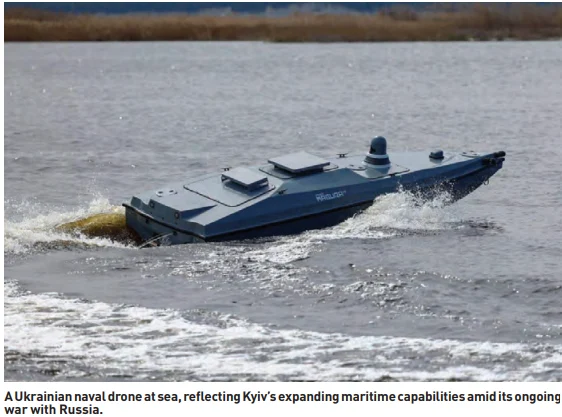
Ukraine has suddenly expanded its naval reach in ways that move the conflict from a regional struggle into a broader, more global contest. In a single weekend, Kyiv demonstrated the ability to strike targets far from its shores, shifting the perception of naval power in the Black Sea and beyond. The actions underscore a new phase in Ukraine’s war to shape maritime dynamics.
The central events unfolded with a bold operation in Benghazi, Libya, where Ukrainian intelligence coordinated a raid using a mothership to deploy seven sea drones. The mission targeted two Russian vessels in the Libyan port, revealing a level of logistical coordination that points to a broader strategy of pressuring Moscow’s overseas footprint and its access to maritime assets abroad.
At the Benghazi port, the MERKURY, a modern Russian navy corvette commissioned just three years ago, capsized and subsequently sank at its berth. Alongside it, the ANGARA, described by Kyiv as carrying weapons, took a direct hit and disappeared beneath the waves. The operation drew immediate attention because it marked a direct, high-profile strike inside a friendly port far from Ukraine’s borders.
A separate, but closely related development occurred in the Gulf of Finland, where a Russian-flagged cargo ship was damaged by a drone strike in international waters. Finnish defence officials cited the attack, and Kyiv refrained from claiming direct credit as it did in March for the ARCTIC METAGAZ strike. Libyan authorities publicly shared videos of the explosions, making the Benghazi raid a public showcase for Kyiv’s reach.
The Kremlin’s reaction blended bravado with quiet caution. In Moscow, spokesperson Dmitry Peskov called the Baltic Sea strike very dangerous and urged Baltic nations to curb Kyiv’s alleged “terrorist practices.” Yet when asked about the Benghazi loss of the MERKURY, his comments were restrained, acknowledging Zelenskyy’s remarks but declining further commentary on the incident.
Analysts say the restraint signals Moscow’s unease about admitting that Ukraine can reach and damage prized warships abroad. Zelenskyy framed the strikes as a demonstration that Russia’s vulnerabilities extend to its overseas bases. He asserted that Moscow could feel Ukraine’s response from western Siberia to the coast of Libya, highlighting a strategic targeting of Russia’s global ambitions rather than local battlefield gains.
Russia’s international footprint has long depended on maritime logistics to support operations across Africa and the Sahel, with Libya serving as a critical Mediterranean gateway. Haftar’s forces host several Russian bases and thousands of personnel, forming a network Kyiv argues could be disrupted by further drone operations and maritime pressure that complicate Moscow’s supply chains.
The Benghazi attack, and the earlier ARCTIC METAGAZ strike, forced Moscow to rethink its energy and weapon shipments through far-flung routes. The Nobel-worthy precision of Ukrainian intelligence in these strikes has been highlighted by observers who say Kyiv’s capabilities are expanding in ways that implicitly challenge rival powers’ access to global chokepoints.
Yet the political reverberations extend well beyond military calculations. In Rome, Prime Minister Giorgia Meloni faces domestic sensitivity over Ukraine policy and the broader public’s appetite for involvement in a conflict with distant consequences. Deputy Prime Minister Matteo Salvini immediately signaled that the Benghazi raid could undermine Italy’s support for funding a war that circulates wreckage around the world, raising domestic political tensions.
Italy’s anxiety is part of a wider Mediterranean worry. Libya’s instability concerns Italian authorities who fear renewed migration pressures and potential spillovers from regional power struggles. A tense exchange occurred between Ukrainian and Italian officials, with Tajani pressing Kyiv to prevent the conflict from spreading into the Mediterranean corridor that Italy regards as vital to its national security and economic interests.
Across the region, Athens also expressed alarm about new fronts in the eastern Mediterranean, where a Ukrainian-made drone linked to naval operations recently appeared in the Ionian Sea. Greece, a country with deep ties to maritime trade and a strong stake in safe shipping lanes, urged regional consultations and cautioned against turning the East Mediterranean into a destabilized zone.
European security officials and defense ministers have urged restraint, warning that the war’s expansion into non-traditional theaters could trigger unintended consequences, including environmental risk and maritime disputes. Some voices, including German Defence Minister Boris Pistorius, argued that while Ukraine has legitimate targets, the conflict must not escalate into the Baltic or other critical sea areas where NATO concerns loom large.
Kyiv has defended its strategy as a lawful response under the UN Charter’s right to self-defense, insisting it is not exporting the conflict or dragging others into war. Ukrainian Foreign Ministry spokesperson Heorhii Tykhyi emphasized that naval assets and vessels transporting weapons to sustain Moscow’s war machine are legitimate military targets, a stance that underscores Kyiv’s focus on undermining Moscow’s global logistics network while avoiding unnecessary escalations elsewhere.